
The Art of Found Objects: How Op Shop Treasures Become Original Paintings
Introduction
Every painting begins long before I pick up a brush. It begins at a market stall, on a shelf in an op shop, or tucked in the corner of a house I visited while travelling. A ceramic vase with a slightly lopsided handle. A tablecloth with a faded floral pattern. A ceramic bird with paint worn off one wing. These are the objects I paint.
I am drawn to things that have already lived a little. Objects that carry history in their glaze, their chips, their particular shade of dusty blue. When I find one that stops me in my tracks, I photograph it immediately — because the light is always right in that moment, and moments like that don’t wait.
The op shop is my studio before the studio.
Why I Style Before I Paint
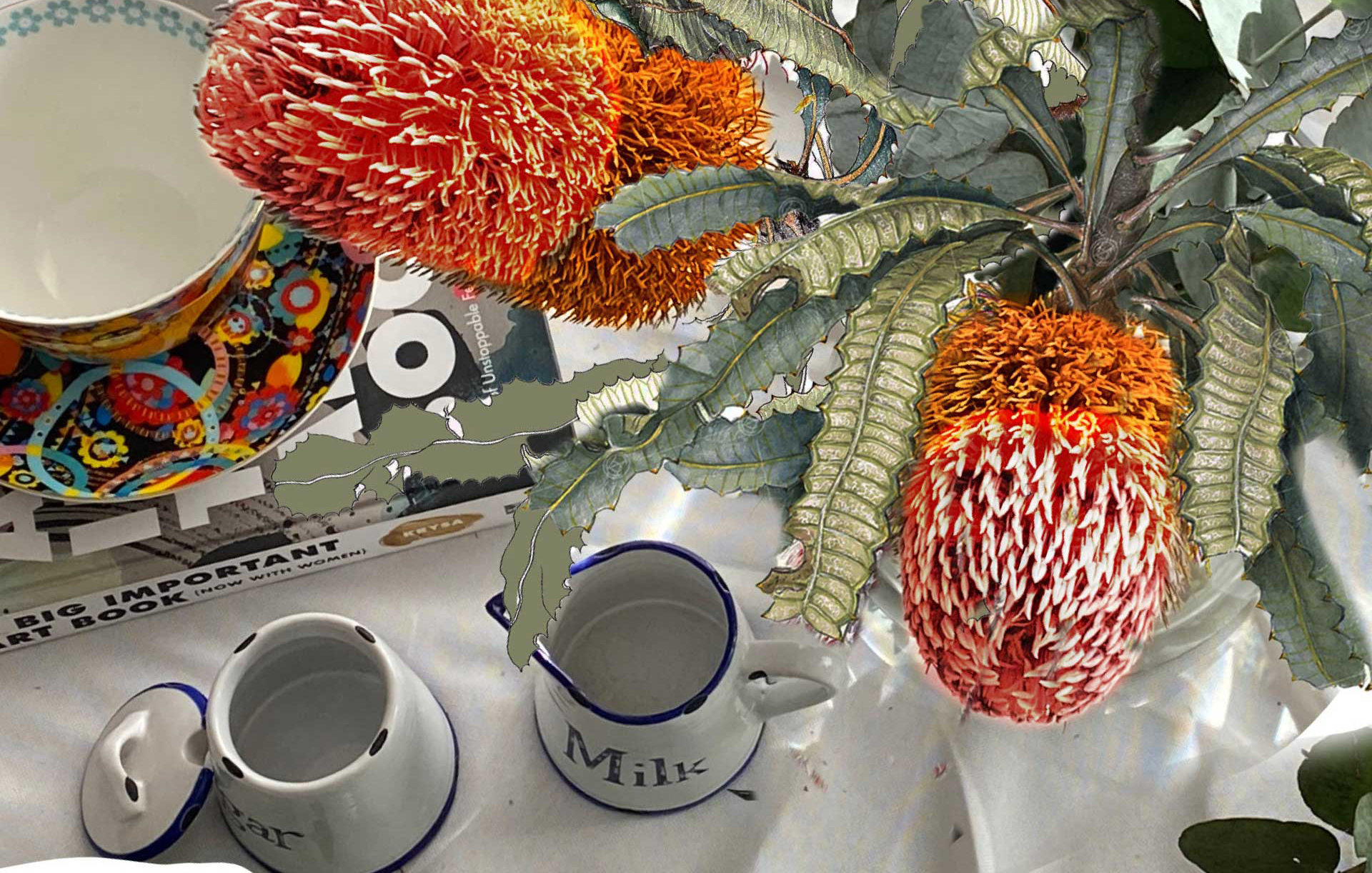
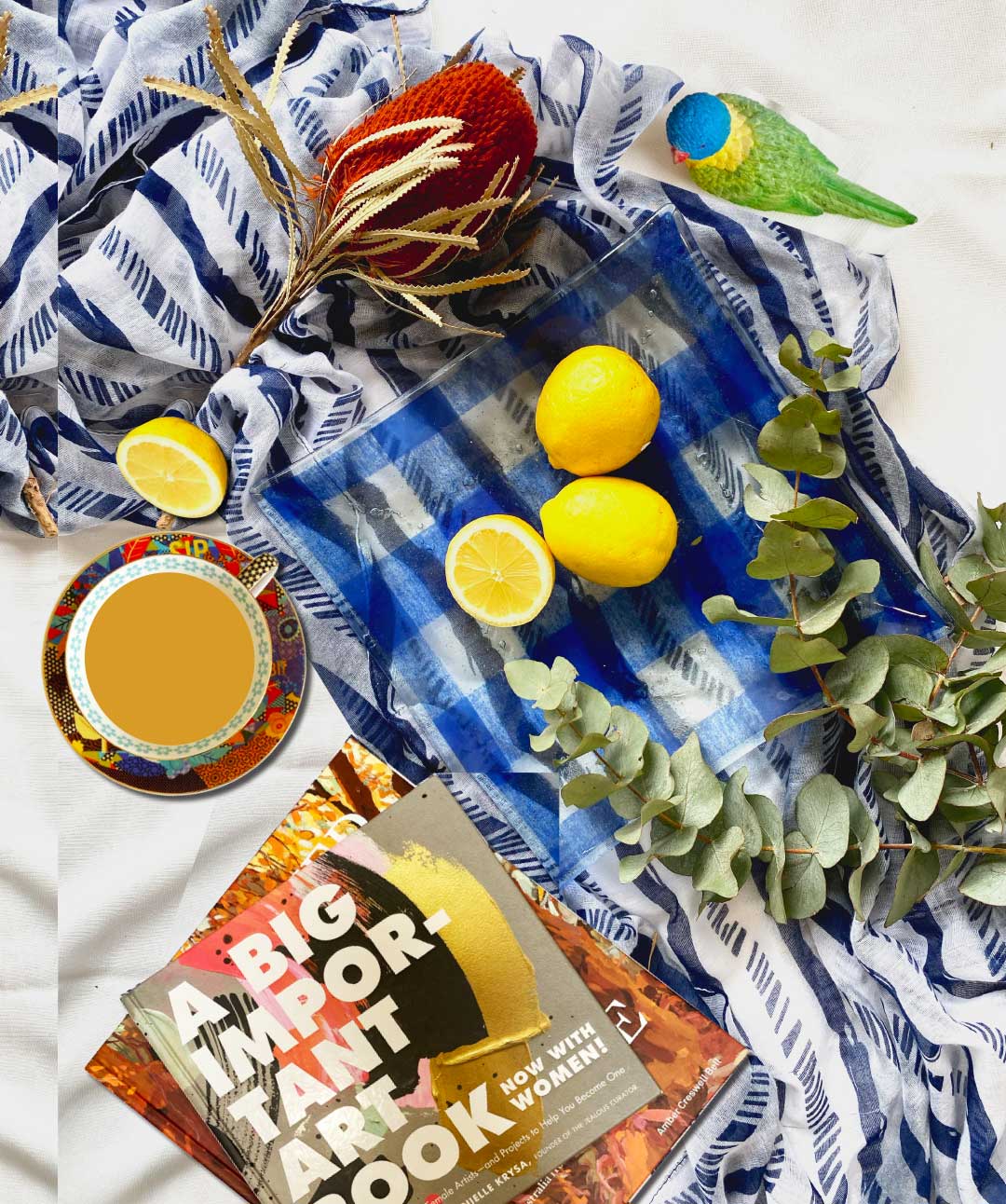
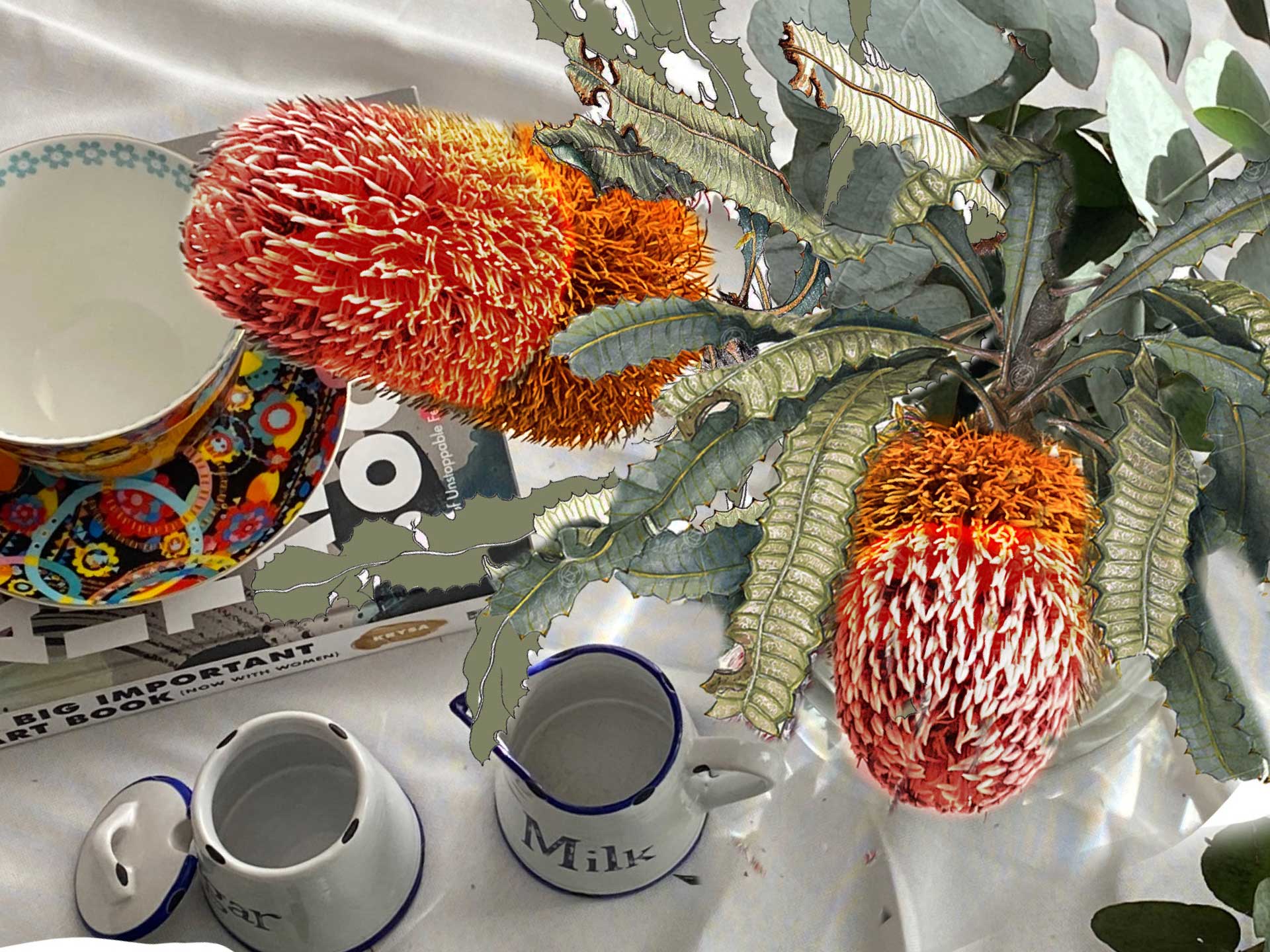
I never paint from imagination alone. Every work I create begins with a real composition — objects arranged on a draped surface, photographed from multiple angles until the balance feels right. The negative space between a tall vase and a low bowl. The way light catches the rim of something ceramic. These decisions are made before a single tube of paint is opened.
This process means my paintings have a specific history that generic still life work doesn’t. The tablecloth in that painting? Found at a market in Montville. The vase with the turquoise glaze? I spotted it in an op shop in Manly and almost left without it. I’m glad I didn’t.
How the process works, step by step:
- I photograph objects as I find them — in the shop, on the shelf, sometimes on the side of the road.
- I store reference images organised by colour, shape, and texture.
- When beginning a new painting, I pull objects from my collection and style them on my studio table.
- I photograph the arrangement from multiple angles and select the composition with the most interesting depth and light.
- I sketch the key lines onto canvas, then begin blocking in colour.
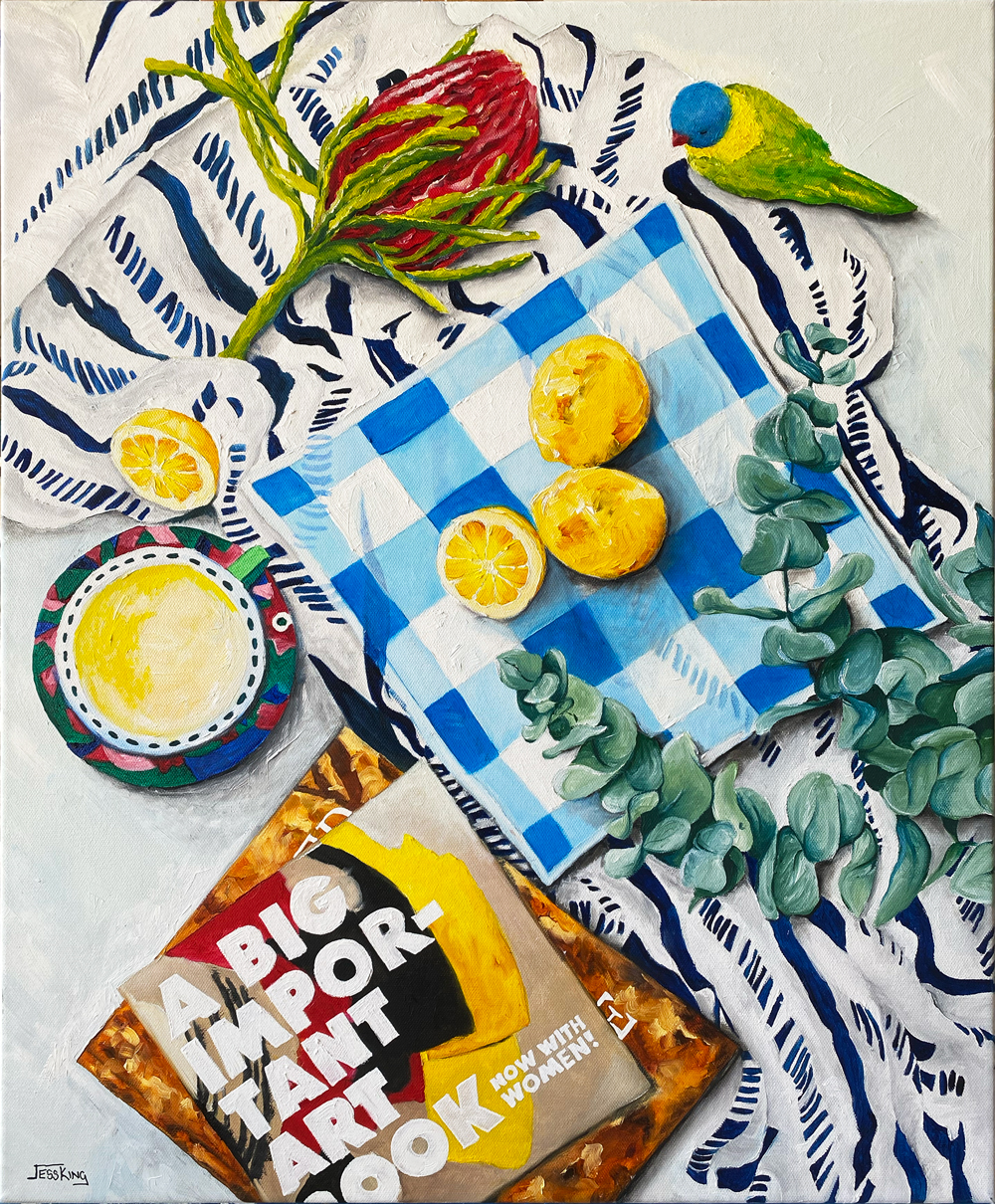
- The painting is built in layers — oil over oil, light over dark — until the surface feels complete.
What Makes a Still Life Feel Alive
The secret is specificity. A painting of ‘a vase with flowers’ is one thing. A painting of this vase, the one with the narrow neck and the slight lean, with these banksias, the ones that were freshly cut when I set them up — is something else entirely. Specificity is what makes a viewer stop. It’s what makes someone feel like they know this object, even though they’ve never seen it.
My colour palette plays a role too. There are no neutral tones in my studio. I work in oils because the pigment has a richness and depth that rewards the time investment, and because the slow drying time gives me space to make decisions — to push a colour warmer, to soften an edge, to let something breathe.
When a collector tells me they love the tablecloth in a particular painting, I know they’ve connected with something real. That cloth is in a box in my studio right now.
The Objects That Started It All
Birds were my first love. Still are. There’s something about painting a bird — the delicacy of feathers, the personality in a turned head, the way a small form can carry enormous presence — that I keep coming back to, year after year.
But alongside the birds came the vessels: vases, jugs, bottles, bowls. And alongside those came the surfaces: draped cloths, weathered timber, the particular warmth of late afternoon light on a white cloth. Op shops and markets gave me access to an endlessly rotating collection of these objects, each one with its own character. I haven’t stopped looking since.
Composition
Finished Painting
Composition
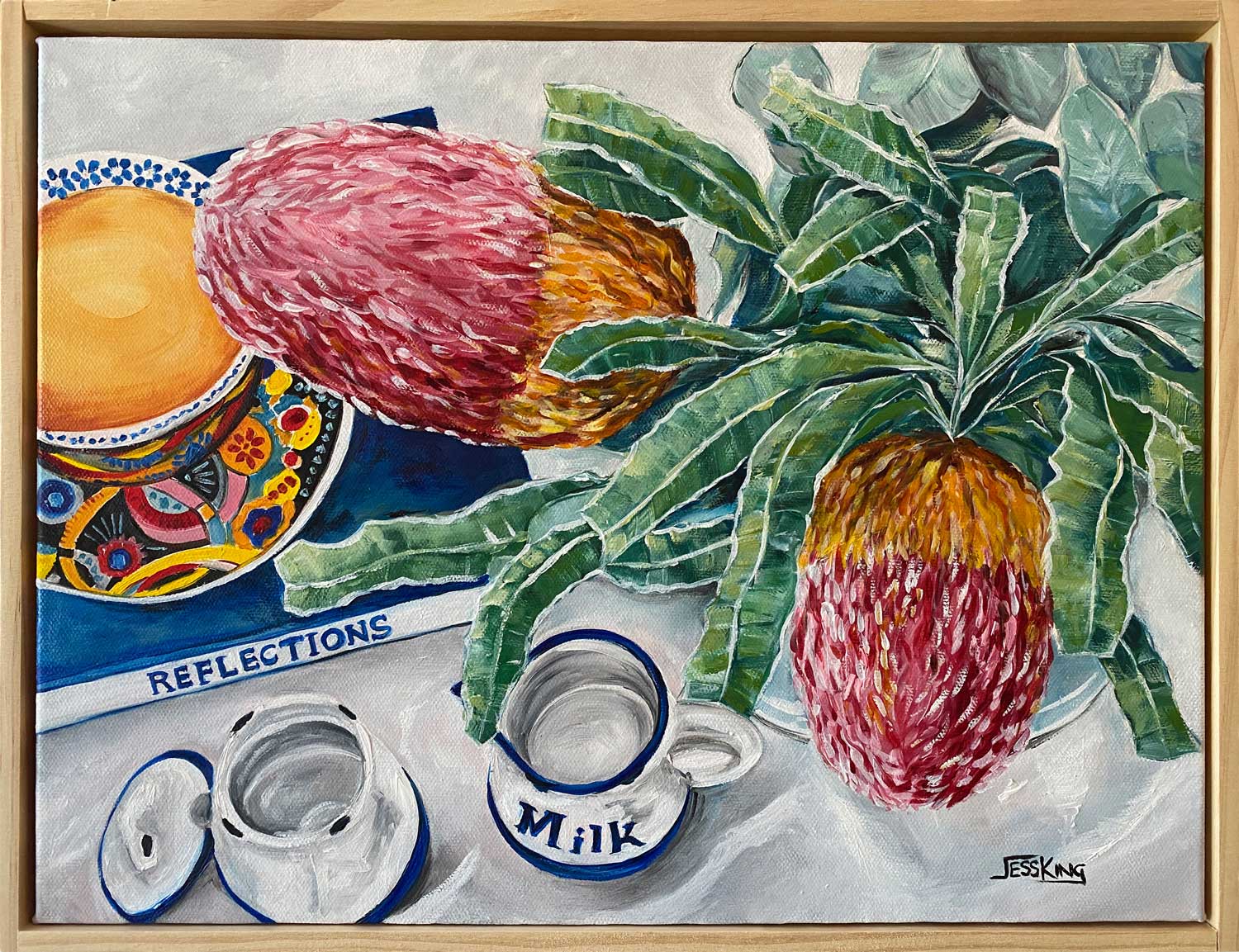
Finished Painting
Frequently Asked Questions
Q: Where do the objects in your paintings come from?
A: Almost everything I paint has been collected over time — from op shops, markets, and travels. I photograph objects as I find them and return to those images when composing new work. Each piece has a specific history, not just a subject.
Q: Do you only paint flowers and birds?
A: Flowers and birds are my signature subjects, but I also paint kitchen items, vases, tablecloths, and everyday objects that catch my eye. The common thread is composition — the way objects relate to each other in space and light.
Q: How do you style a composition for a still life painting?
A: I select 3–5 objects with varied heights and textures, arrange them on a draped surface considering the light source, photograph from multiple angles, and choose the composition with the most interesting negative space. The styling happens before the canvas is touched.
Q: Can I commission a painting that includes a specific object?
A: Yes. I welcome commission requests and enjoy the challenge of incorporating objects that hold personal meaning for the collector. Get in touch to discuss what you have in mind.
Q: How long does it take to paint an original still life in oils?
A: Depending on size and complexity, an original oil painting typically takes me between one and three weeks. Smaller works (around 20×20cm) can be completed in a few sessions; larger compositions with multiple objects require additional drying time between layers and can take longer.
Q: Are your still life paintings available as prints?
A: Yes. Many of my original still life paintings are available as high-quality limited edition prints, signed and numbered, as well as open edition prints at a more accessible price. Browse the shop or get in touch to ask about a specific work.
Q: Do you ship original paintings Australia-wide?
A: Yes. All original works are packed carefully and shipped tracked throughout Australia. Free shipping is available on orders over $100. International shipping is available on request.